Ringette Equipment
As a Coach you have a responsibility to ensure that all your players are safe on the ice. This includes not only training proper and safe skills, but also ensuring they have complete and properly fitted equipment
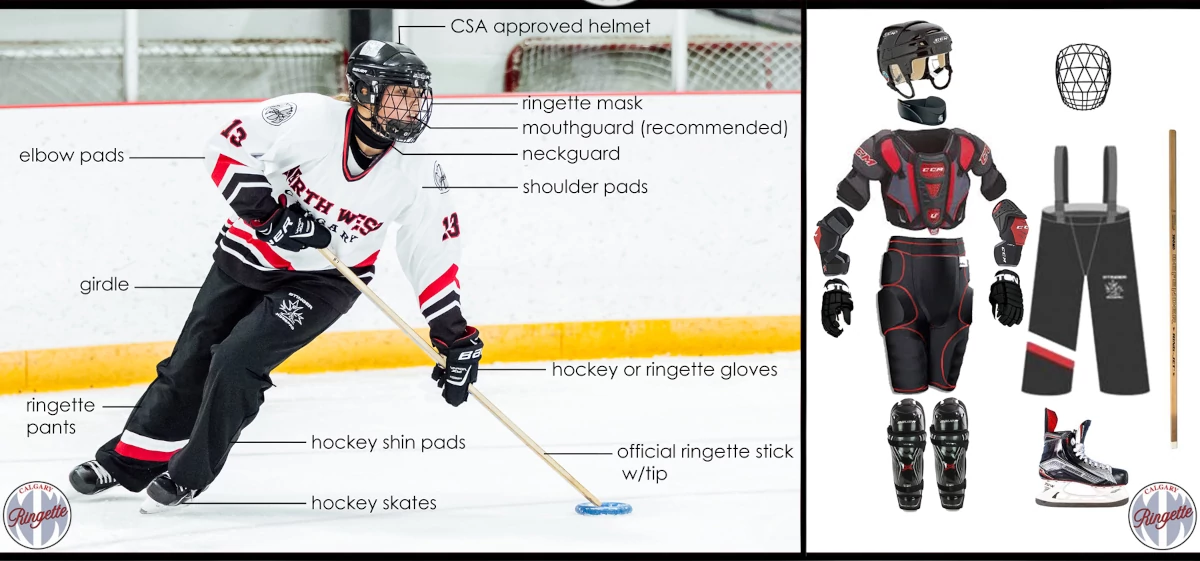
Ringette requires specialized equipment designed to ensure player safety and optimize performance on the ice. Players wear the same foundational gear as ice hockey players, including helmets , shoulder pads, elbow pads, gloves, shin guards and neck guards. Ringette pants as well the helmet cage are specific to ringette.
Helmet Fit
Properly fitting a hockey helmet is essential to ensure safety and comfort during play. A well-fitted helmet helps protect the head from impacts while staying securely in place. Here’s a step-by-step guide to fitting a hockey helmet properly:
Select the Right Size
- Start by measuring the circumference of the player’s head using a soft tape measure, placing it about an inch above the eyebrows. Use this measurement to choose the appropriate helmet size according to the manufacturer’s sizing chart.
- If you’re between sizes, opt for the larger helmet for better adjustability.
Adjust the Helmet for a Snug Fit
- Loosen the helmet adjustment mechanisms, usually found on the sides or back, and place the helmet on the head.
- Adjust the helmet so it sits level on the head, covering the forehead but not obstructing vision. The front of the helmet should sit about one finger-width above the eyebrows.
Secure the Chin Strap
- Fasten the chin strap snugly under the chin. The strap should be tight enough to hold the helmet in place but not so tight that it feels uncomfortable or restricts movement.
- Test the fit by opening the mouth—the strap should feel slightly snug but not overly tight.
Adjust the Cage or Visor
- Ensure the cage fits properly. The cage should sit close to the chin without touching it. Most cages have adjustable straps to achieve the correct positioning.
- Make sure the cage doesn’t obstruct vision and that the chin cup sits snugly against the chin without shifting.
Perform a Fit Test
- Check that the helmet fits snugly without any pressure points or gaps. It should feel secure but comfortable.
- Gently shake the head side-to-side and up-and-down. The helmet should remain stable and not shift or wobble.
- Ensure the helmet does not move excessively when pressure is applied from the front, back, or sides.
Regularly Inspect the Helmet
- Ensure the helmet is in good condition, with no cracks, broken parts, or worn-out padding.
Ringette Cage
Choosing the proper size of ringette cage is essential for both safety and comfort. The cage should fit snugly to the helmet and align correctly with the player's face, ensuring full protection without obstructing vision. When fitted properly the chin cup should rest comfortably and securely against the chin. It is important to choose a cage that matches the size of the helmet.
Skates
Properly fitting hockey skates is crucial for comfort, performance, and injury prevention. Here’s how to ensure your skates fit correctly:
Choose the Right Size
Hockey skates should generally be one to one and a half sizes smaller than your regular shoe size. However, it’s important to try on skates to ensure the right fit, as sizing can vary between brands.
Check the Length
Your toes should lightly touch the front of the skate when you're standing, but not be cramped. When you bend your knees (in a skating stance), your toes should pull slightly back from the front of the skate, giving you enough room for comfort.
Check the Width
The skate should feel snug around the midfoot and heel without causing any discomfort. You should not feel any pinching, but the skate should not be too loose either. If the skate feels too wide, consider trying a narrower size or adjusting the lacing.
Heel Fit
The heel should be securely locked into the back of the skate, with minimal movement when you walk. If the heel moves inside the skate, it could lead to blisters or discomfort while skating.
Check for Pressure Points
Once your skates are laced up, stand and bend your knees. If you feel any uncomfortable pressure points or pinching, you may need to adjust the fit or try a different model.
Consider Professional Fitting
If you’re uncertain about the fit, consider having your skates professionally fitted at a sporting goods store. Many stores offer skate sharpening and molding services to ensure a custom fit.
Girdle
Properly fitting a ringette girdle is essential for comfort and protection during the game. A girdle helps protect the hips, thighs, and tailbone from impact while allowing for mobility.
Waist Fit
The waistband of the girdle should sit comfortably around your natural waist. It should not be too tight to restrict movement or too loose to ride down during play. Adjust the waistband to a snug but comfortable position, usually just above the hips.
Leg Fit
The leg openings of the girdle should fit securely around your thighs, with the protective padding sitting comfortably over the hips and thighs. The leg openings should not be too tight, as this can cause discomfort or restrict movement. However, they should be tight enough to stay in place while you skate or make quick movements. Some girdles have adjustable straps or elastic bands to fine-tune the fit around the legs.
Padding Alignment
Ensure that the padding, including the protection for the hips, tailbone, and thighs, is properly aligned with the areas it is designed to protect. The hip and thigh pads should cover the outer sides of the hips and thighs, while the tailbone pad should sit directly over the base of your spine.
Snug Fit without Restriction
The girdle should be snug enough to stay in place and provide protection, but not so tight that it cuts off circulation or restricts your movement. You should be able to move freely, skate, and bend without feeling restricted. If the girdle feels too tight, try loosening the straps or adjusting the fit; if it's too loose, it may not provide adequate protection.
Shin Pads
The top of the shin pad should cover just above your knee cap, and the bottom should extend down to the middle of your skate tongue. When standing with your knees slightly bent, the shin pad should cover your shin bone completely. If it's too short, it won't provide adequate protection; if it's too long, it can restrict movement or be uncomfortable.
Ringette Pants
Ringette pants are an essential piece of equipment designed to provide comfort, mobility, and protection during gameplay. Most associations will have specific requirements for ringette pants, including designated colors or styles that align with the team’s uniform. When selecting pants, proper sizing is important to ensure both performance and safety. The pants should fit snugly at the waist, staying securely in place without the need for constant adjustment. They should also be long enough to fully cover the tops of the skates. Always check with your association’s guidelines to ensure the pants meet their standards.
Ringette Stick
When selecting a ringette stick, it’s essential to choose one designed specifically for ringette, as these sticks are built to meet the sport's unique requirements. Proper stick length is crucial for performance; when standing in skates, the stick can be no higher than the armpit. A stick that is too long can hinder mobility and control, while a shorter stick may reduce reach.
Neck Guard
All players must wear a BNQ certified neck guard. Neck guards should be worth snug and securely fastened around the neck. Should a player's neck guard come loose while on the ice, they must be removed immediately from the ice until the neck guard can be secured.
Mouth Guard
As of January 2025, mouth guards are not mandated equipment by Ringette Canada.
Shoulder Pads
Ringette Canada mandates all players to wear should pads.
Shoulder pads should fit snugly to the body without restricting movement or feeling too tight. The shoulder caps should sit directly over the player’s shoulders, covering the joint without slipping or leaving gaps.
Elbow Pads
The elbow pad should cover your elbow joint, with the top of the pad extending just below the middle of your upper arm and the bottom covering the top of your forearm. The padding should protect the entire elbow area, ensuring the joint is well-cushioned from impacts or falls.